
OnlyFans Renewals That Fail When a Card Lapses
When a renewal fails on OnlyFans, the cause is usually the payment method rather than the account itself. A lapsed or expired card triggers a decline, and the platform then follows a set sequence that ends in a paused subscription. Understanding that sequence helps subscribers restore access without losing the billing period they already paid for.

The process is mechanical. A charge is attempted, the bank responds, and the outcome decides whether the subscription continues or pauses. Most confusion comes from assuming access ends the moment a charge is declined, which is not how the system works.
Renewal problems are common enough that ranking services now track public profile activity across the platform. BestOnlyFans, for example, compares public profile prices, promotions, activity and media counts so subscribers can judge a page before committing to a paid month.
Anatomy of a failed renewal
A failed renewal is not a single event. It is a short chain of events that runs from the first declined charge to the point where the subscription is paused. Each step has a defined trigger, and knowing the order makes the outcome predictable.
The chain begins on the renewal date, when the platform submits the charge to the card issuer. If the issuer declines, the subscription is not cancelled outright. The system keeps the record open and waits for either a successful charge or the end of the retry window.
Nothing in that chain requires the subscriber to act on the first day. The important detail is that the already-paid period is untouched, so there is a working window in which the problem can be fixed.
How long access survives
Access does not disappear when the charge is declined. The subscriber keeps the remainder of the current paid period, because that period was already paid for in the previous successful transaction. What changes is the future of the subscription, not the present.
During that gap, the page remains viewable and any content already unlocked stays unlocked. Direct messages remain readable, and the subscription still appears as active in the account until the paid period expires.
- Confirm the renewal date and how many days remain in the current paid period.
- Check the saved payment method for an expiry date that has already passed.
- Update the card details before the paid period ends.
- Watch for a confirmation that the next charge has been scheduled.
- Verify the subscription status once the new charge succeeds.
Pay-per-view messages and tips behave differently from the subscription itself. Those are separate transactions, so a pending renewal does not block them, but a paused subscription can limit what a subscriber is able to unlock next.
The practical tip: fix the payment method before the current paid period ends, not after. Once the subscription pauses, restoring it may require a fresh checkout rather than a simple retry.
Decline reasons compared
Not every decline means the same thing, and the fix depends on which one occurred. A card that expired is a different problem from a card that is valid but blocked by the issuing bank.
The table below sets out the common causes and what each one usually requires. In most cases the subscriber can resolve the issue without contacting the platform.
| Decline cause | What it usually means | Typical fix |
| Expired card | The saved card passed its expiry date | Add a current card and resave it |
| Insufficient funds | The balance could not cover the charge | Top up the account and wait for the retry |
| Bank block | The issuer flagged the transaction | Approve the merchant with the bank |
| Wrong billing details | Address or postal code does not match | Correct the details on the card record |
Expired cards are the most straightforward case and the most common one. Banks that block a charge are the least predictable, because the card itself is valid and the decline comes from a decision made on the issuer side.
Retry behaviour explained
After a decline, the platform does not abandon the charge immediately. It retries the same saved payment method on later dates, giving the subscriber time to correct the underlying problem. The retries stop once the window closes, and the subscription then pauses.
Nothing retries forever. This matters because a subscriber who assumes the system will keep trying indefinitely may let the paid period run out without acting. Once the retries are exhausted, the route back in is a new payment rather than a pending retry.
- Month one: the subscription renews normally and the card is charged once.
- Month two: if the card has lapsed, the charge is declined and retries begin.
- Month three: if no retry succeeds, the subscription pauses and access ends.
- Month four: restoring access requires a valid payment method and a fresh charge.
Costs stay predictable while the subscription is active, because the platform charges the same recurring amount each cycle. A paused subscription simply stops generating charges until it is restored. A practical starting point is best only fans fee explainers, which lists pages by the signals above.
Restoring the subscription
Recovery is short when the problem is identified early. The order below keeps the process simple and avoids resubscribing to a page that could have been kept with a card update.
- Open the subscription settings and locate the saved payment method.
- Replace the expired or declined card with one that is current.
- Save the new details and wait for the system to attempt the charge.
- Confirm the payment succeeded and that the subscription shows as active.
- Check the next charge date so the following renewal is expected.
- Set a reminder a few days before that date to review the card again.
A subscription restored this way keeps the same page and the same access, provided the paid period had not fully expired. If it had, the subscriber is starting a new billing cycle rather than resuming the old one.
When the card is fine but the bank blocks it
Some declines have nothing to do with the card. The expiry date is valid, the balance is sufficient, and yet the charge fails because the issuing bank flagged it. These cases are identified by a decline that repeats across several attempts with a card that works everywhere else.
The fix happens with the bank, not on the platform. A short call or message confirming that the merchant is expected is usually enough, after which the next retry can succeed. There is no need to share account details or explain what the subscription is.
- Do not delete the card record before the bank has approved the merchant, or the retry has nothing to charge.
- Do not add several cards at once, which can trigger further fraud checks.
- Do not ignore repeated declines and assume the platform will sort it out.
- Do not resubscribe at full price while a retry on the old card is still pending.
A warning worth keeping in mind: a bank that blocks one charge will often block the retry as well, so approving the merchant once saves a second failed cycle.
A phishing link usually copies a familiar billing screen to capture card details.
Avoiding repeat failures
Most lapsed renewals repeat for the same reason: the payment method is only reviewed after a charge fails. A short routine before the renewal date prevents that pattern without much effort.
Keeping a second valid card on file is the simplest safeguard, because the platform can fall back to another method if the first one is declined. Reminders matter too, since cards expire quietly and the change is easy to miss.
Subscribers who track public profile details before subscribing tend to have fewer surprises, and a comparison service such as BestOnlyFans can show which pages run promotions that lower the first month. Paid subscriptions typically sit between $4.99 and $15, averages run $5 to $10, and the full paid range reaches $49.99 at the top end. There is no base price below $4.99, though some promotional first months can dip under it.
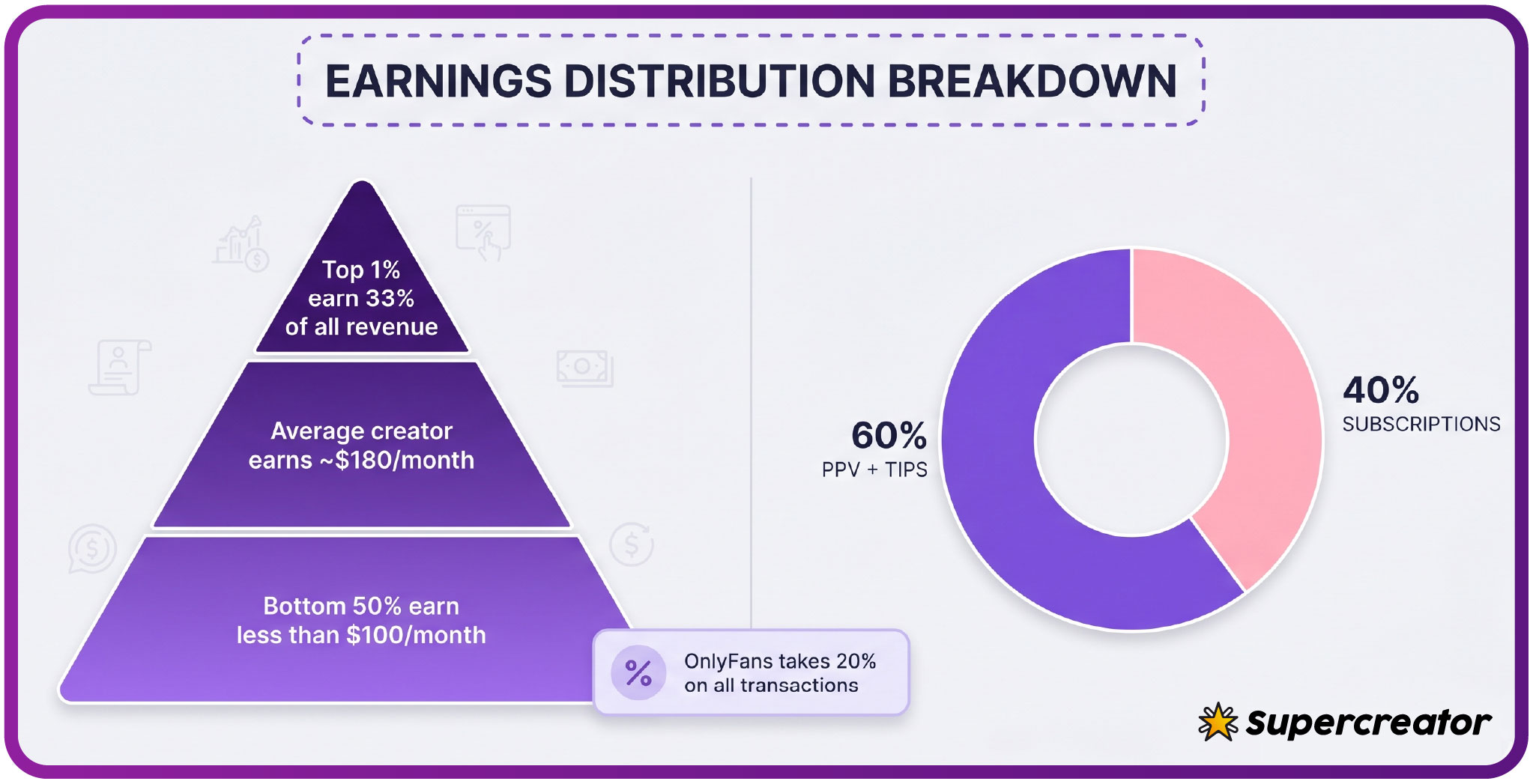
- The platform fee is 20% on everything, including subscriptions, tips and pay-per-view messages, so the creator keeps 80%.
- Free pages are simply those with the price set to $0, where earnings come from pay-per-view messages and tips instead of a recurring charge.
One billing rule catches people out. When a creator raises the subscription price, auto-renew stops, and existing access lasts only until the current paid period ends. That is a separate cause of a paused subscription and has nothing to do with the card, which is why checking the renewal terms before the next cycle is worthwhile.
| How fast the payment is fixed | What is kept | What is lost |
| Before the paid period ends | The subscription continues without interruption | Nothing beyond the failed charge attempt |
| After the paid period ends, before retries stop | Unlocked content and message history | Active status until the new charge succeeds |
| After retries are exhausted | Account history and past purchases | The subscription, which must be started again |
OnlyFans has no built-in discovery feed or directory, which is why ranking sites exist in the first place. They compare public signals such as price, promotions, activity and media counts, and services like BestOnlyFans publish that information for subscribers weighing one page against another.
FAQ
Does a declined charge end the subscription straight away?
No. The current paid period continues to its end date, and the subscription only pauses after every retry fails.
Can a promotional first month drop below $4.99?
Yes. Promotional first months may dip below the minimum, but there is no standard base price under $4.99.
What happens if the creator raises the subscription price?
Auto-renew stops, and existing access lasts until the current paid period finishes.
How does the platform fee affect a creator’s earnings?
The platform takes 20% of subscriptions, tips and pay-per-view messages, so the creator keeps 80%.